
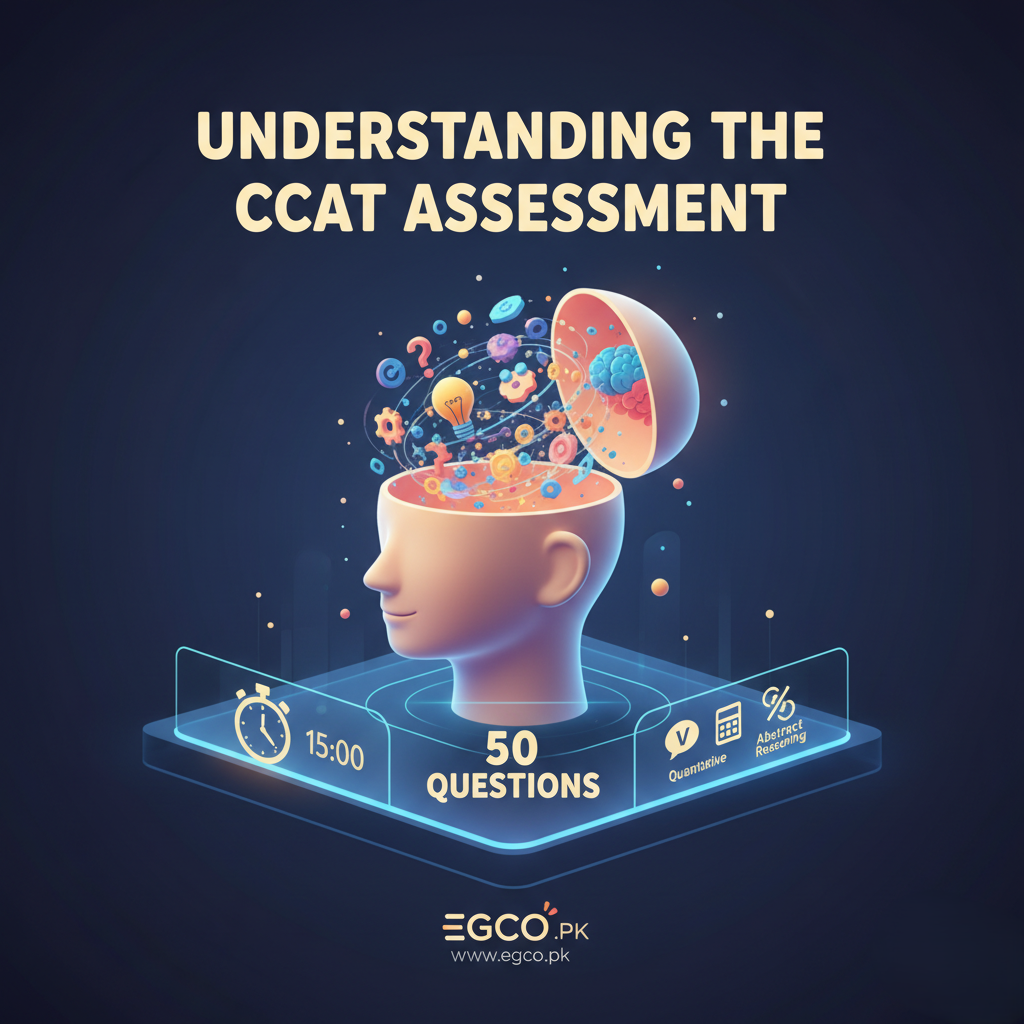
The Criteria Cognitive Aptitude Test (CCAT) is a psychometric test designed to measure your problem-solving, critical thinking, and learning ability. Employers use it to predict how quickly a candidate can learn new skills, adapt to new challenges, and succeed in a role.
Typically, the CCAT consists of 50 questions divided into three main sections — verbal, quantitative, and abstract reasoning — and you have just 15 minutes to complete it. That’s only 18 seconds per question, which makes time management absolutely crucial.
In essence, the CCAT doesn’t just measure what you know — it measures how you think.
Why the CCAT Matters for Your Career
Scoring high on the CCAT can significantly improve your chances of landing top job opportunities. Employers view it as a strong predictor of job performance, especially for analytical or decision-making roles.
A high CCAT score demonstrates:
- Quick learning and adaptability
- Strong problem-solving skills
- Logical and analytical reasoning
- The ability to work under pressure
If you perform better than most test-takers — like the example shown in your achievement (99th percentile) — you’re already ahead of 99% of native English college graduates. That’s a major competitive edge!
10 Proven Tips to Pass the CCAT Assessment
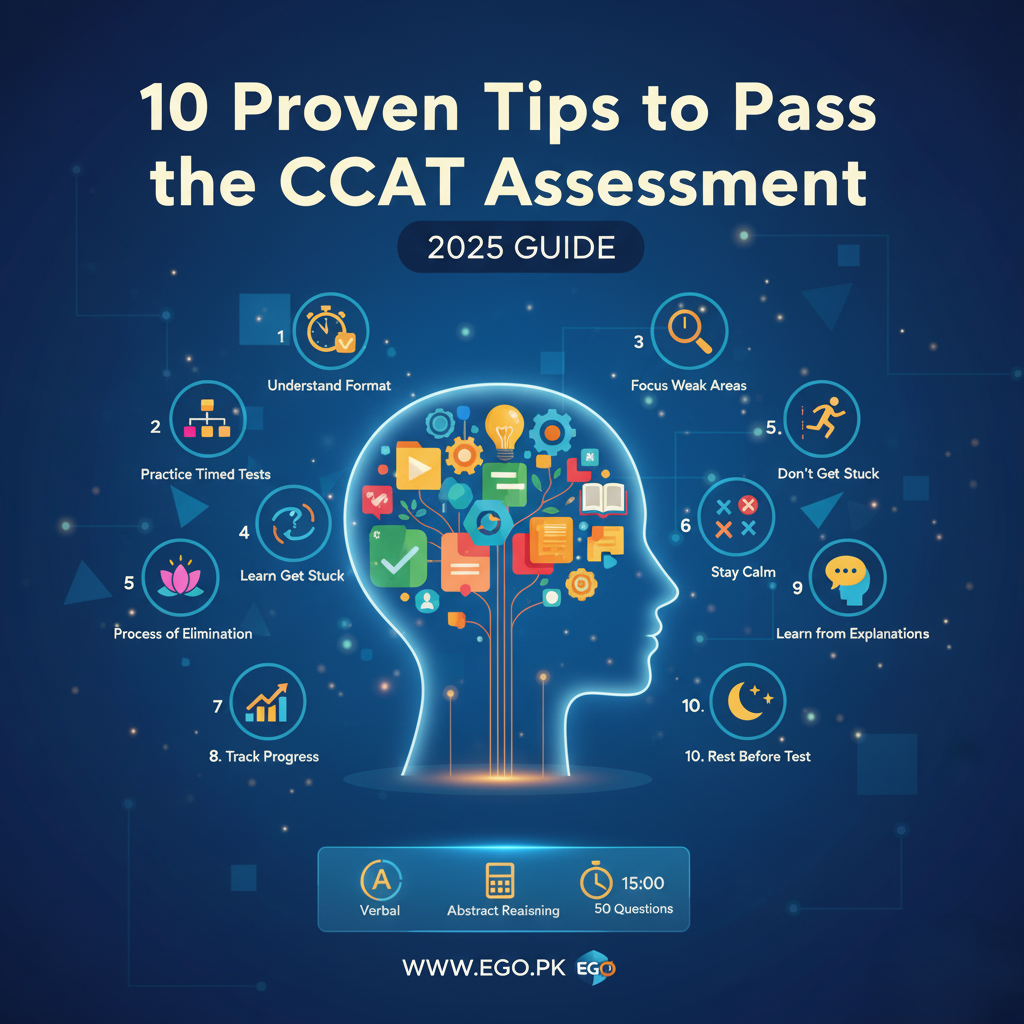
Let’s dive into actionable strategies to help you prepare effectively and perform at your best.
1. Understand the Test Format
Familiarize yourself with the types of questions — numerical reasoning, verbal analogies, and abstract patterns. The more comfortable you are with the format, the less time you’ll waste figuring out question styles.
2. Practice with Timed Tests
Since the CCAT is all about speed and accuracy, practice under timed conditions. Many websites offer free CCAT practice tests that replicate the real test environment.
3. Focus on Your Weak Areas
Identify which section you struggle with most. For example:
- Struggling with math? Review basic arithmetic and word problems.
- Weak in verbal reasoning? Practice analogies and sentence completions.
4. Learn Shortcuts and Strategies
In the numerical section, learn mental math tricks. In abstract reasoning, recognize recurring patterns like symmetry, rotation, or progression.
5. Don’t Get Stuck
You only have 15 minutes — so if you’re unsure about a question, skip it and move on. It’s better to answer more questions correctly than to lose time on one tough question.
6. Use the Process of Elimination
Even if you’re unsure of the correct answer, eliminate options that are clearly wrong to improve your odds.
7. Stay Calm and Focused
Your mindset is key. Stress can affect your performance. Practice breathing techniques and maintain a calm, confident attitude before and during the test.
8. Track Your Progress
Take multiple practice tests and compare your results. Seeing improvement over time builds confidence and helps you identify patterns in your mistakes.
9. Learn from Explanations
After every practice test, read the answer explanations carefully. Understanding why you got something wrong is the fastest way to improve.
10. Rest Before Test Day
Avoid cramming the night before. A well-rested mind performs better, especially on reasoning-based assessments like the CCAT.
Common Mistakes to Avoid
Even the most prepared candidates make small mistakes that cost them big points. Watch out for:
- Spending too long on one question
- Second-guessing your initial answer
- Ignoring time alerts
- Forgetting to review basic math or vocabulary
Tools & Resources for CCAT Preparation
| Resource Type | Example Tools | Description |
|---|---|---|
| Practice Tests | CriteriaCorp, JobTestPrep | Simulate real CCAT conditions |
| Study Apps | Quizlet, Magoosh | Improve reasoning and math skills |
| Books | “Cognitive Aptitude Practice Guide” | Structured learning and explanations |
| YouTube Channels | Psychometric Coaching | Visual explanations and strategy tips |
6 Frequently Asked Questions (FAQs)
1. How hard is the CCAT test?
It’s challenging but manageable with consistent practice. The main difficulty lies in the short time limit.
2. What is a good score on the CCAT?
A score of 35+ out of 50 typically places you above the 80th percentile — an excellent result for most employers.
3. How can I improve my CCAT speed?
Practice under strict time limits and focus on recognizing question patterns quickly.
4. Can you fail the CCAT?
There’s no official “pass” or “fail,” but employers set benchmarks. Failing to meet their threshold may affect your application.
5. How long should I study for the CCAT?
1–2 weeks of focused practice (1 hour per day) is often enough for strong improvement.
6. Are there any free practice tests?
Yes! You can find free CCAT practice materials on CriteriaCorp’s official website and educational portals like JobTestPrep.
Final Thoughts
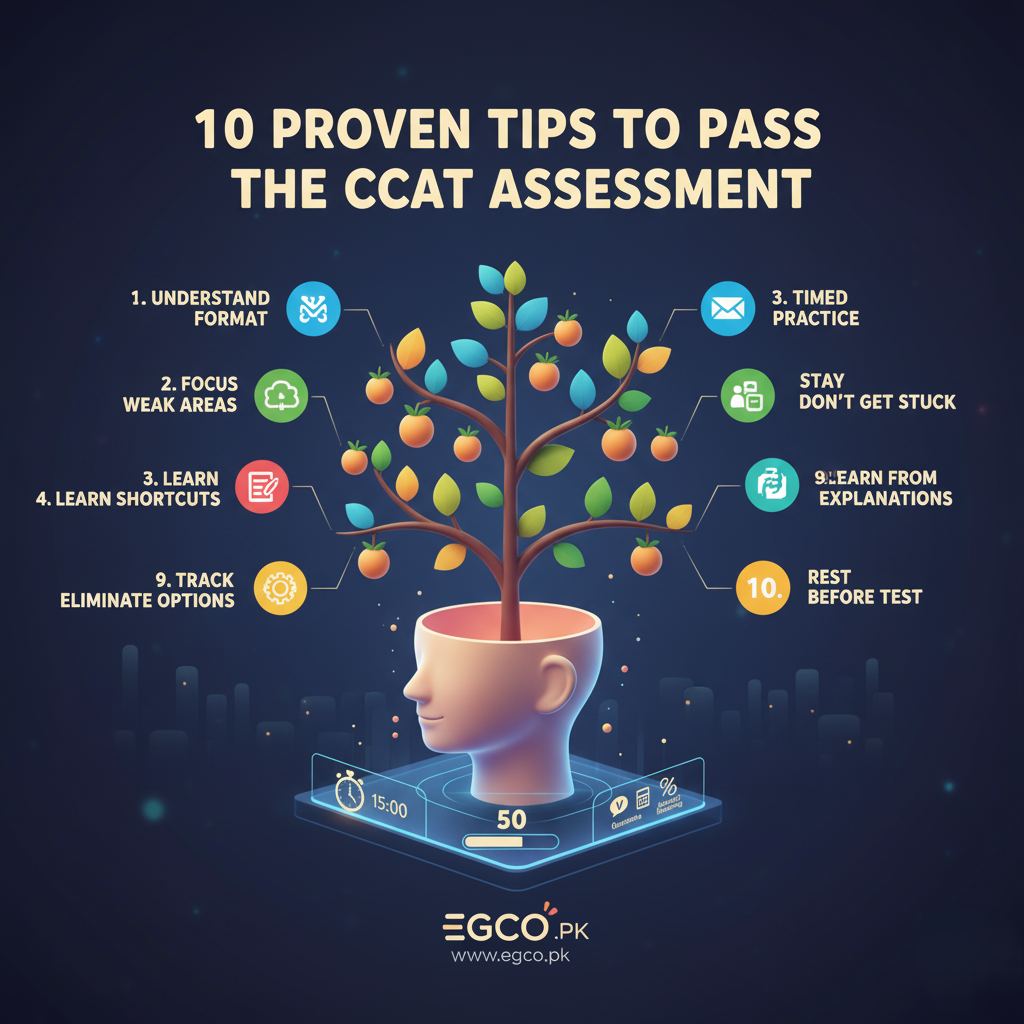
Passing the CCAT Assessment isn’t about raw intelligence — it’s about preparation, mindset, and time management. With smart strategies, consistent practice, and a calm approach, you can significantly raise your score and open doors to exciting career opportunities.
Remember: You’re not just preparing for a test — you’re proving your ability to think, learn, and adapt.
🔗 Read More at: www.egco.pk
Your hub for educational insights, career growth, and cognitive mastery.